The Story
The STORY is an entry point. And there are no rules about what a story 'has' to do.
Most of us learned how to be a writer by writing. I grew up near trees, and by ocean shores; they taught me & always started with just one initial point.
Your own feeling is what fuels structure.
In our workshops we have a very simple concept - and that is to follow your story...the one you truly want to tell. Once you learn to set it down, you may share it with the crucial others.
I ask this, because the first thing we are as a writer is as a Story-Teller. Our entry to all our formats is fueled by what we learn as we work with our own stories all over our transmogrifying planet.
Our thoughts grow like all thing. We begin with one seed and then grow into, finally, a forest.
Always, we follow the story.
Here's a Thought-Experiment...
...think of a story you'd like to explore; something
done because you're interested in it.
It should be the kind of yarn that you'd like
to explore in audio-perspective in Audio-Movies (The New AM), see on Stage, or stay home & watch on Video.
Begin
with the notion of a story you'd really have to write. Tell us a bit about that story - but not too much. We don't want all the details, and there's no need to know how it will end.
Don't simply try and match things you see in contemporary movies, or plays, or hear in podcasts of Sonic Theatre.
No need to duplicate what's currently popular; that's writing for a parade which has already turned the corner. Write something you'd like to write.
It's what's called "Dendrite-Narrative" where just one off-shoot may create a forest/a field of flowers/the world herself.
Think
about the characters in your own story - as much as the story itself. You won't
need a detailed biography - just the bare bones about them; where they're from, perhaps a characteristic or two.
If
you haven't a story in mind, & you find it's late at night & the coffee
has gone cold & your eyes are closing - the story is still elusive...try
an indigenous approach. Just before you go to sleep, drink half of a
small glass of water & think about your story...imagine yourself with a
tale where, somehow, a dream holds an answer.
Soon as you wake up, drink the other part of the water & recall your dream... I learned this while working in Labrador as various projects drew me there many decades ago.
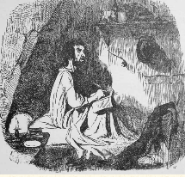
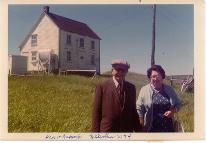
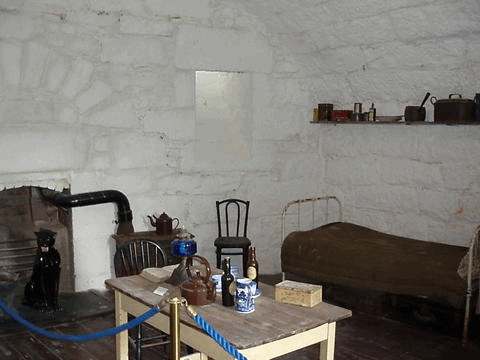
Look at the Pictures I've included on this page. Imagine what stories are hidden in each picture. Perhaps the pictures, in this order, will tell one aspect of a story. How would you combine them all in one creation?
Just start the process...you already know how to daydream. That's all you need do...In our magical world of writing, you're rewarded for daydreaming.
CBA- the show we'll be tapping as our pitch continues, returns us to an era that demanded exactly what was needed, and this is the story of how we all now know of CBA.
For me it's the perfect era to return to where I started in TV/Film production, which was writing and directing Reality-Based Drama.
That's why it was so exciting when Executive Producers, David C Field, & John Kearney first read Scott S Herford’s screenplay. David says his reactions were immediate and twofold:-
“I knew this screenplay was screaming at me that it had to be produced and that its production would be a greater exercise in walking the tightrope than any other I’d been involved in since 1981”.
“This was the first Australian screenplay I had read aimed directly at young school age adults since “Puberty Blues”(1981) and “Looking for Alibrandi”(1999). They had both done extremely well domestically/internationally and I believed that, given the dearth of similar material since the turn of the century, this screenplay could achieve similar success – I was genuinely excited”.
This project is in honour of David Field. And remember his creative life. David, we carry the baton now.
The demand came partly from the subject matter but mostly from the way it was dealt with.
The subject was bullying – “well there’s nothing new about that we’ve had bullies since time began in real life and on screen we know that bullies went back as far as Kirk Douglas (“Spartacus”) in the Colosseum through to Robert De Niro playing Al Capone (“The Untouchables”) and a whole range of others to boot” Field mused.
...In this approach to writing, we start with something you'd like to write.
Your story could be totally made up, or it might be based on something a favorite wild Aunt did one unforgettable Halloween... there’s NO need to avoid your own life when you're writing drama. You'll show up in the story anyway, might as well leap in.
We are collectors & wide-eyed observers of the world. We love sounds, and sights and smells and tastes, we love running, and we love being still.
Different sounds connect with everything we do.
We feel. We remember hurts & joys. Sometimes what we want to say emerges in a form we hadn’t planned :) That’s fine as well.
We write to surprise ourselves with ourselves.
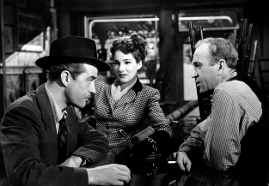
This page is in Memory of the great Doris Dowling, a buddy, and one of my life-teachers.. She brought me into Theatre East in LA.
https://www.themoviedb.org/person/79248-doris-dowling?language=en-US